- Industry News
- September 25, 2026
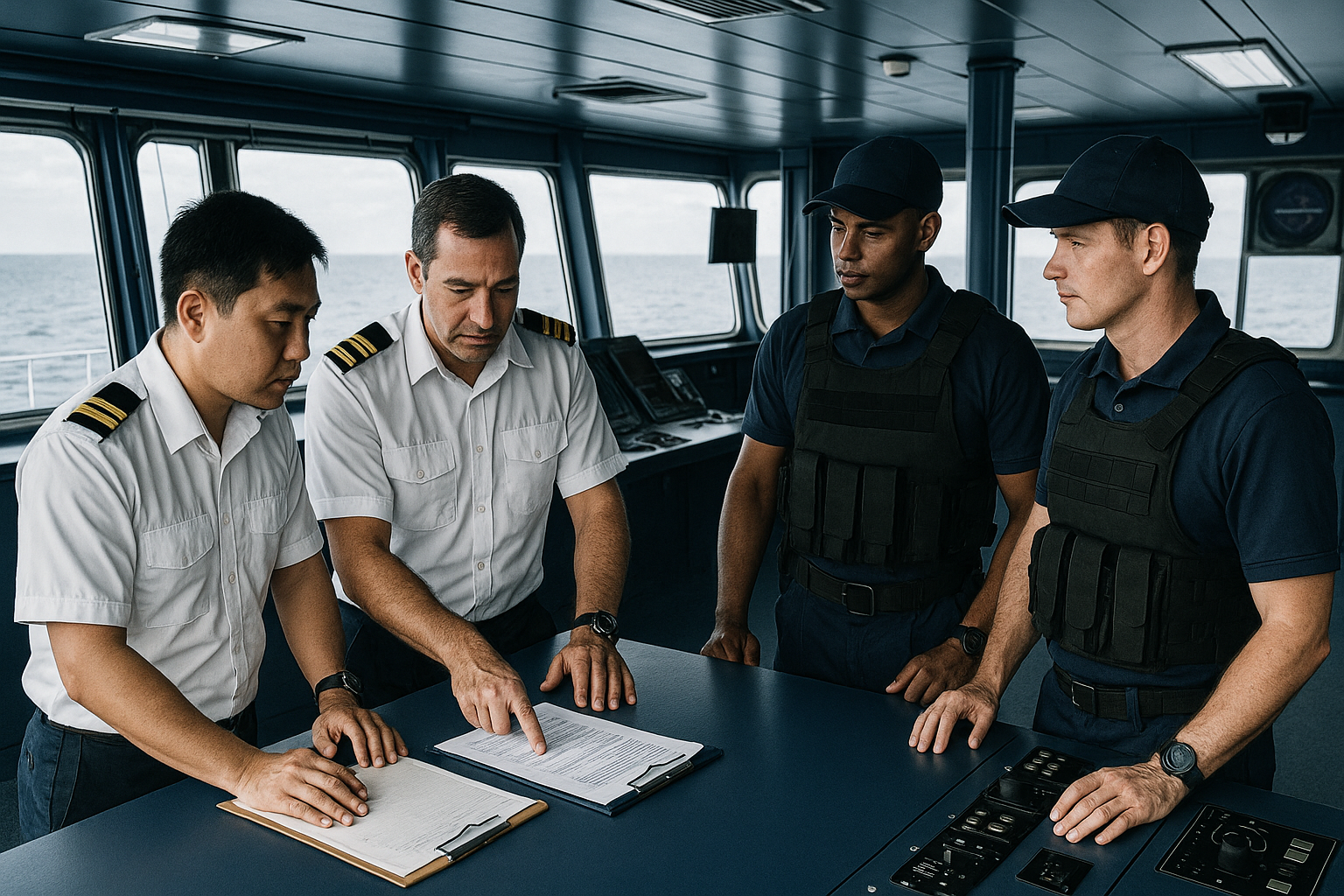
Onboard Security Coordination
Introduction
On modern commercial vessels, onboard security teams work as an integrated part of the ship’s organisation, not as a separate force. The Master retains overall authority, while the security team supports safe passage by delivering focused protective duties, clear reporting, and calm coordination with bridge and deck personnel.
Understanding how this relationship functions in practice helps shipowners, charterers, crew, and job seekers see what professional maritime security should look like on board.
Industry context
Across high-risk and routine trade routes alike, the relationship between the Master, crew, and security team underpins effective defence against piracy, armed robbery, smuggling, and stowaway attempts. A well-structured security chain of command ensures that protective actions against external threats never compromise navigation, cargo operations, or passenger safety.
Under the ISPS Code and wider IMO guidance, the Master’s authority extends to all activity on board, including security. Professional teams support this by following the ship security plan, respecting flag-state requirements, and maintaining strict discipline around access control, watchkeeping, and alarm responses. This approach reduces the likelihood of contraband movements, supports anti-smuggling and counter-narcotics efforts, and ensures that any incident is logged, reported, and escalated correctly.
As cyber risk and information security concerns grow, predictable communication patterns between the bridge, crew, and security personnel also help protect sensitive voyage data and routing decisions. When threat levels rise, coordinated briefings, controlled access points, and a shared understanding of defensive measures allow the vessel to respond calmly and efficiently, preserving crew welfare and vessel integrity.
Practical measures
- Maintain a clear security chain of command: Confirm in writing that the Master has final authority, with security personnel operating under the ship’s procedures, company policy, and flag-state guidance, including agreed limits on intervention.
- Standardise communication and reporting: Use scheduled check-ins with the Master or Officer of the Watch, concise log entries, and structured incident reports so that every watch knows the security posture and recent events.
- Integrate with shipboard routines: Align security patrols, access control, and visitor management with bridge, deck, and engineering schedules to avoid disrupting seamanship, passenger handling, and maintenance activities.
- Drill for elevated threat levels: Rehearse scenarios covering piracy approaches, suspicious small craft, smuggling attempts, and unauthorised access, including alarm triggers, crew mustering, and coordination between security posts and the bridge.
- Apply intelligence-led and technology-supported measures: Use pre-voyage risk assessments, routing advice, CCTV, access systems, and clear standard operating procedures to ensure the whole crew understands what the security team is doing and why.
Further resources
To see how specialised maritime security teams integrate with vessel operations under the Master’s authority, explore our what we do overview and the full range of maritime security services we provide.
Source
Original article: LinkedIn post on onboard security teams and shipboard coordination
Careers
If you're interested in joining our team, apply here: Join MS Security.
Prepared by MS Security Group — experts in vessel protection, anti-piracy, and counter-narcotics operations.