- Industry News
- September 7, 2026
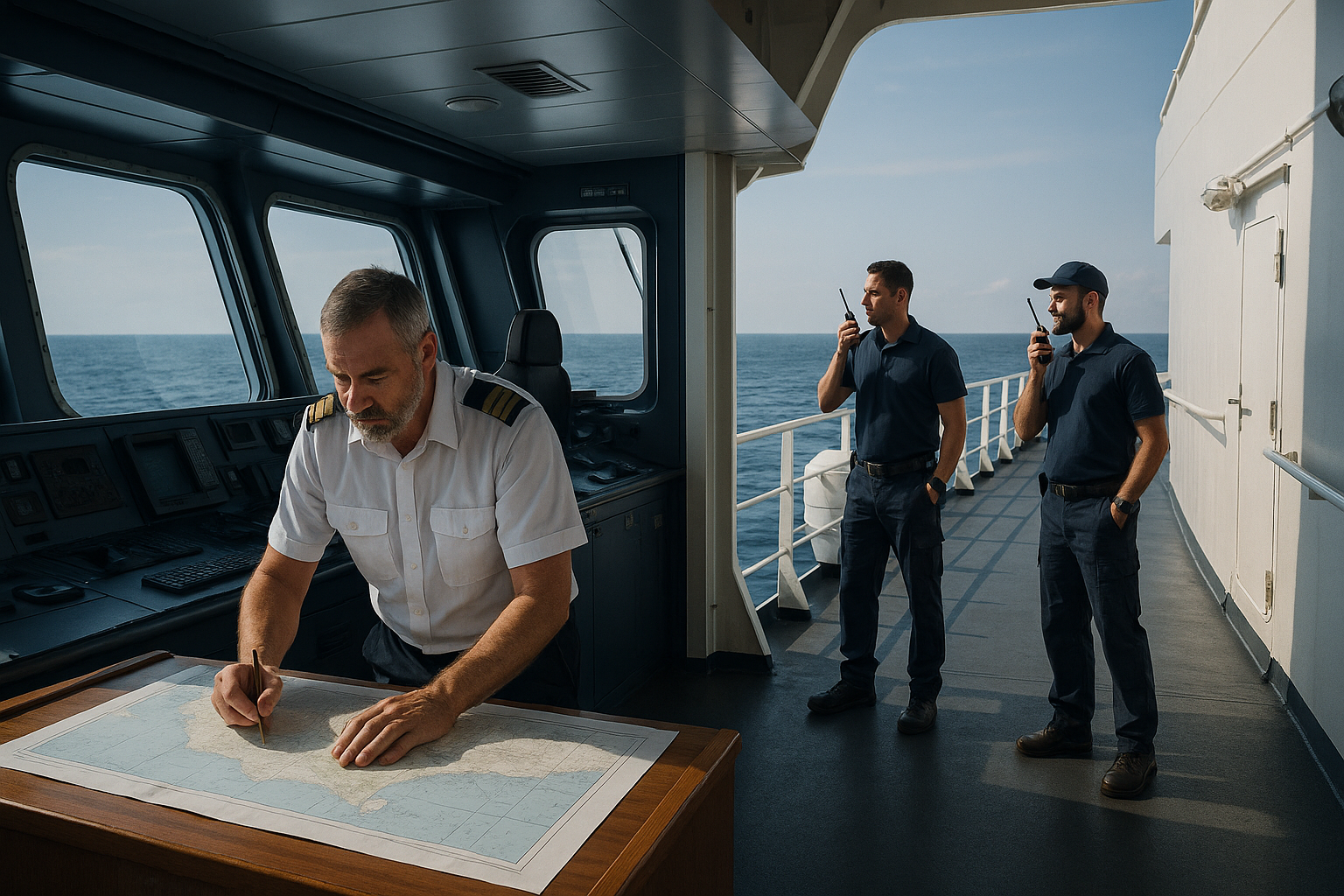
Master And Security Teams
Introduction
On any commercial vessel, the ship’s master remains in overall command, including during security incidents. Maritime security teams are embarked to support that authority, not replace it. When roles are clearly defined, security professionals can enhance situational awareness, strengthen procedures, and help crews manage risk without disrupting safe operations.
For maritime operators and job seekers alike, understanding how security teams integrate with the bridge, deck and engine departments is essential to maintaining professional boundaries, protecting lives and cargo, and meeting ISPS Code obligations.
Industry context
The relationship between maritime security teams, the master and crew sits at the centre of modern risk management at sea. In piracy-prone regions, embarked guards contribute threat reporting, surveillance and protective measures that support the master’s routing and speed decisions. Against smuggling and narcotics threats, disciplined teams help tighten access control, monitor cargo areas and document suspicious activity within existing shipboard routines.
Cyber security is increasingly part of this picture, with physical security and watchkeeping reinforcing controls around critical systems and restricted spaces. Compliance with the ISPS Code and IMO guidance means all actions must align with the Ship Security Plan and the master’s lawful direction. Clear communication channels, concise reporting and respect for watch discipline protect crew safety, reduce fatigue and ensure that security measures do not interfere with navigation, cargo operations or emergency procedures.
During any security incident, the principle is straightforward: the ship’s master makes the final call. Security personnel advise, report and act strictly within the agreed plan, the vessel’s chain of command, and applicable law, ensuring that decision-making remains with those responsible for safe operation of the ship.
Practical measures
- Embed security within the chain of command: Conduct daily briefings with the master and, where applicable, CSO/SSO to confirm threat assessments, rules for use of equipment, and clear incident escalation paths.
- Standardise communications and reporting: Use concise radio and phone protocols, along with structured written logs that align with the Ship Security Plan, so bridge and duty officers receive actionable information without unnecessary noise.
- Protect crew routines and watch discipline: Plan patrols, access control and inspections around deck and engine schedules to avoid disrupting maintenance, cargo work, rest hours or established safety and watchkeeping practices.
- Integrate drills and training: Run joint security drills with bridge, deck and engine teams that cover piracy response, stowaway checks, bomb threats and unauthorised boarding scenarios, reinforcing both emergency procedures and the master’s decision-making role.
- Apply intelligence-led and SOP-driven measures: Use updated risk intelligence, routing guidance and vessel-specific SOPs to shape watch reinforcement, lighting plans, citadel preparation, and coordination with coastal and port authorities.
Further resources
For a broader view of how professional security teams integrate with ship operations, explore our overview of what we do at MS Security Group or review our specialised maritime security services designed around compliant, ship-focused protection.
Source
Original article: LinkedIn draft on master and security team cooperation
Careers
If you're interested in joining our team, apply here: Join MS Security.
Prepared by MS Security Group — experts in vessel protection, anti-piracy, and counter-narcotics operations.