- Industry News
- May 23, 2026
Police Skills At Sea
Introduction
Former police officers frequently ask whether their skills transfer into maritime security roles onboard commercial vessels. The answer is yes, provided they can adapt policing fundamentals to shipboard procedures, safety requirements and long-rotation working patterns at sea.
This FAQ-style overview explains how law enforcement experience fits vessel protection, what additional qualifications are required, and what ex-police candidates should expect from life and work onboard commercial ships.
Industry context
Commercial shipping continues to face layered security risks, from piracy and armed robbery in specific sea lanes to organised smuggling, stowaway attempts and insider threats in complex port environments. Alongside physical risks, cyber vulnerabilities and data leakage can undermine voyage security, routing decisions and cargo integrity. Against this backdrop, compliance frameworks such as the ISPS Code and wider IMO guidance demand structured security planning, documented drills, and clear lines of authority between the ship’s Master, Company Security Officer and onboard personnel.
Former police officers are well placed to support this environment because they are trained in incident response, calm decision-making, evidence preservation and accurate reporting. Onboard, the emphasis is rarely on “enforcement” in the traditional policing sense; instead it focuses on prevention, access control, observation, liaison with crew and port stakeholders, and documentation that stands up to audit or legal scrutiny. When aligned with a strong safety culture and an understanding of multinational crews, policing skills can enhance crew security awareness, tighten control of restricted areas, and reinforce the vessel’s security plan during port calls, at anchor or on passage through higher-risk regions.
Practical measures
- Match policing skills with maritime qualifications: Obtain a valid seafarer medical such as ENG1 (or equivalent where required), complete mandatory sea safety courses, and be prepared for client background vetting to meet port and terminal access standards.
- Adopt an ISPS and Master-led mindset: Understand that onboard security operates within the ship’s security plan and under the Master’s authority; ex-police must shift from independent enforcement to coordinated, procedure-led prevention.
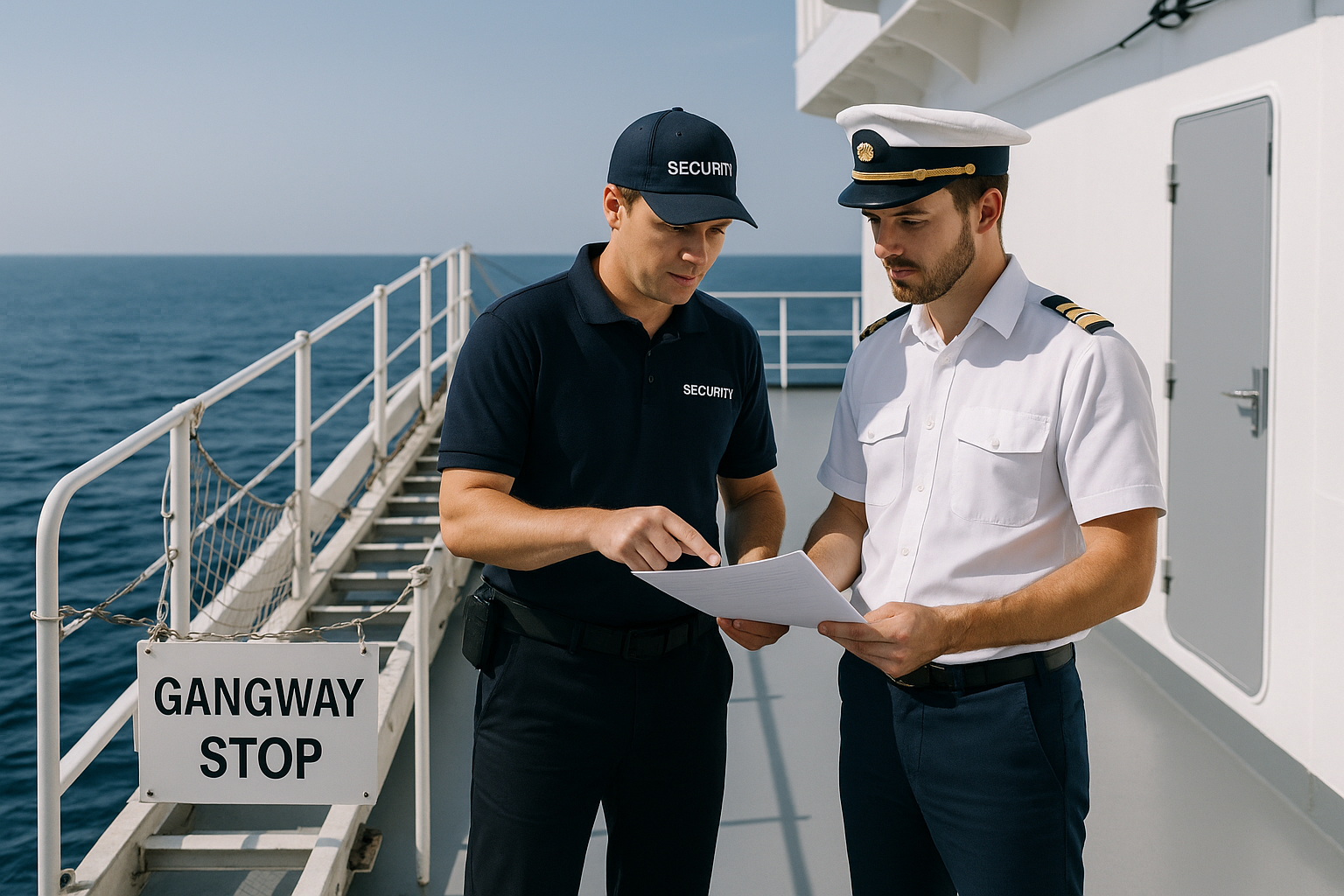
- Focus on observation, access control and reporting: Apply investigative instincts to watchkeeping, gangway control, baggage and vehicle checks, and accurate incident logs, ensuring written reports are clear, factual and usable for audits or investigations.
- Integrate with multinational crews and port stakeholders: Practise calm, professional communication, respect cultural differences, and work closely with officers, ratings, port security and terminal staff to ensure consistent application of security procedures.
- Train continuously for shipboard emergencies: Participate fully in drills, security exercises and scenario-based training so that responses to piracy threats, smuggling attempts or security breaches remain rehearsed, safe and aligned with company SOPs.
Further resources
For a broader view of how MS Security Group supports vessel protection and shipboard security operations, explore our dedicated services overview on MS Security Group services.
Source
Original article: LinkedIn post on ex-police in maritime security
Careers
If you're interested in joining our team, apply here: Join MS Security.
Prepared by MS Security Group — experts in vessel protection, anti-piracy, and counter-narcotics operations.