- Industry News
- June 13, 2026
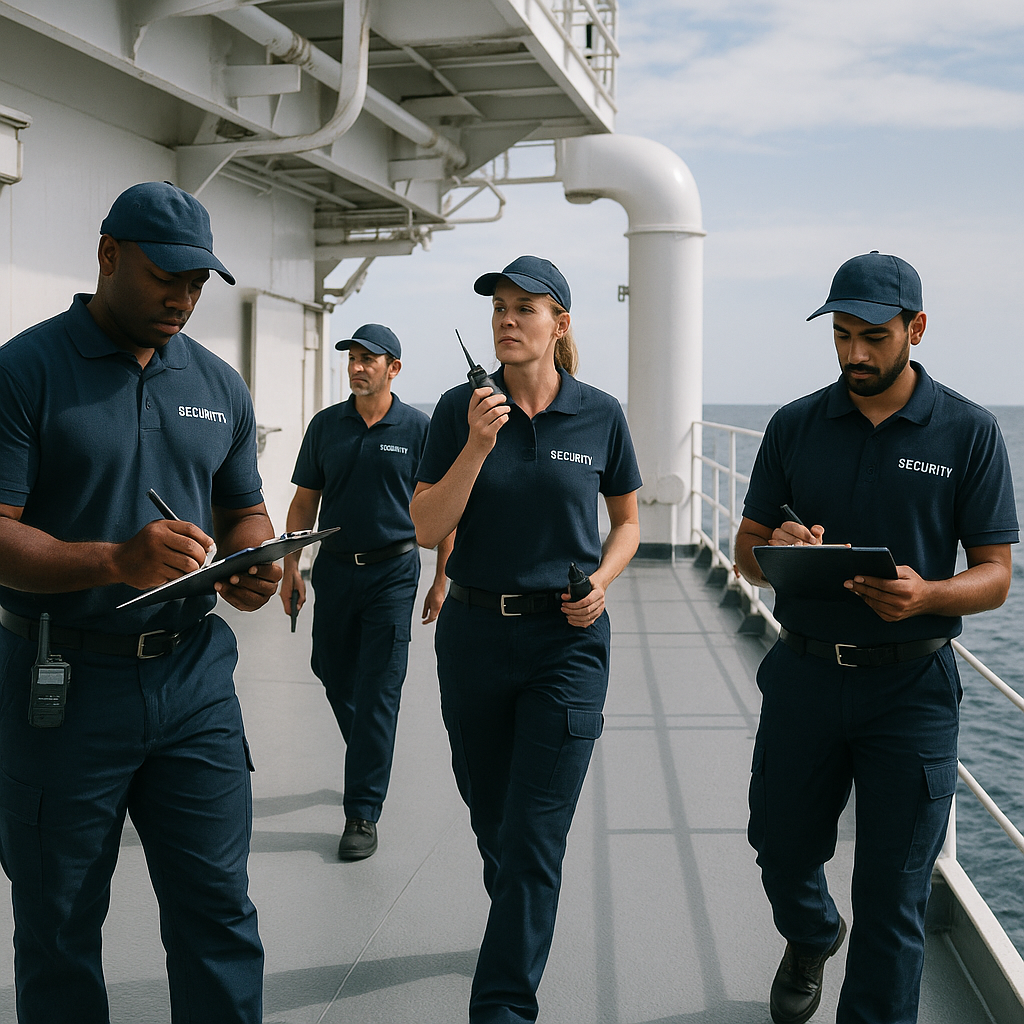
Consistent Maritime Security Standards
Introduction
Maritime security providers operate across very different vessels, routes, and threat profiles, yet shipowners expect consistent protection every time. Achieving this reliability depends on structured systems, not informal habits, so that every rotation delivers the same standard of ship security and compliance.
For maritime operators and job seekers, understanding how providers create this consistency helps you assess competence, prepare for audits, and build safer, more predictable onboard routines.
Industry context
Modern maritime risk extends well beyond classic piracy hotspots. Shipowners now balance exposure to armed robbery, stowaways, narcotics smuggling, sanctions breaches, cyber-enabled intrusion, and complex port security rules. In this environment, inconsistent shipboard protection can quickly turn into detention, fines, cargo delay, or injury.
Consistent standards mean that access control, watchkeeping, and search routines are carried out the same way on a coastal ferry as on a long-haul cargo vessel, adjusted only for threat level and port regulations. This alignment supports ISPS Code and IMO expectations, protects the Master’s authority, and reduces human error during busy port calls, crew changes, and routing decisions through higher-risk areas.
For crew safety, predictable security routines are critical. Clear mustering, rehearsed emergency responses, and disciplined documentation (logs, incident reports, and evidence handling) create a traceable record that stands up to investigation and audit. When security teams work from company-level Standard Operating Procedures (SOPs) and report into a central operations function, vessel protection is less dependent on individual style and more on proven, repeatable processes.
Practical measures
- Standard Operating Procedures and supervised onboarding – Security officers are trained and assessed against written SOPs that specify routines for access control, patrols, searches, reporting, and evidence handling, with supervised onboarding to ensure they apply these procedures correctly on different vessel types.
- Structured reporting, logs, and handovers – Audit-ready logs, incident and near-miss reports, and formal handover notes ensure that the next watch or relief team understands current risks, outstanding tasks, and escalation history, keeping protection consistent across shifts and rotations.
- Role-specific training and fitness for duty – Pre-deployment preparation focuses on the exact vessel profile and route, including ISPS-related checks, port expectations, and fatigue management on long or irregular watches, so security staff can maintain standards under operational pressure.
- Central operational oversight and escalation – A shore-based operations centre provides 24/7 supervision, intelligence support, and defined escalation paths, ensuring that difficult decisions and complex incidents are handled in line with company policy rather than improvised onboard.
- Aligned routines with the Master and crew – Security plans are integrated with bridge procedures, crew work-rest patterns, and port workflows, so that drills, searches, and watchkeeping reinforce safety and compliance without disrupting core vessel operations.
Further resources
To see how structured security programmes are built and delivered across different vessel profiles, explore our maritime security capabilities and how they support consistent protection and compliance for operators worldwide.
Source
Original article: LinkedIn post on consistent maritime security standards
Careers
If you're interested in joining our team, apply here: Join MS Security.
Prepared by MS Security Group — experts in vessel protection, anti-piracy, and counter-narcotics operations.