- Industry News
- November 14, 2026
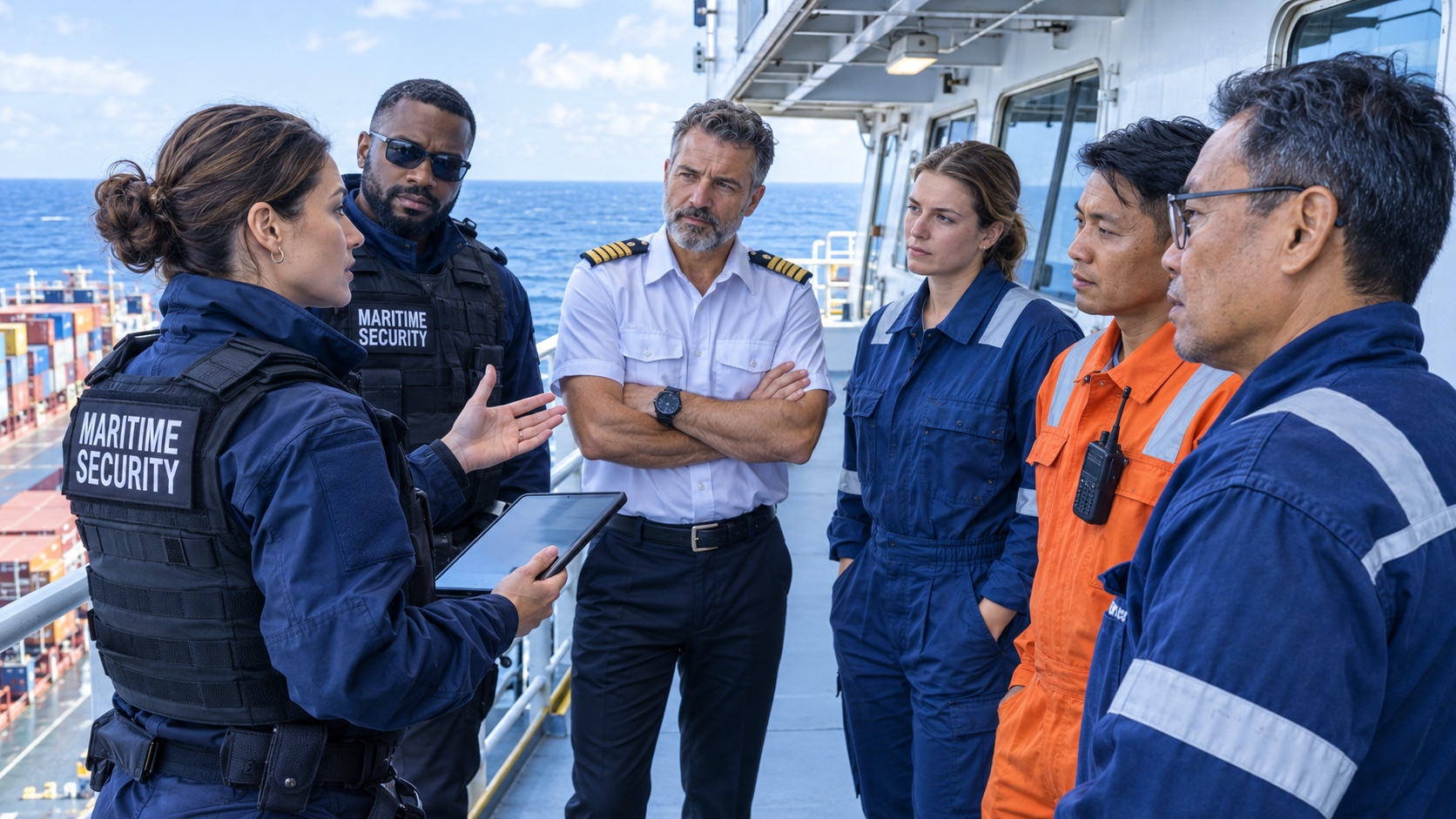
Onboard Security Standards
Introduction
Shipowners, charterers, and operators should expect clear, professional standards from any maritime security team deployed onboard. These standards must translate into disciplined day-to-day conduct, minimal disruption to crew routines, and full alignment with the Master’s authority and the Ship Security Plan.
For maritime professionals and job seekers alike, understanding what “good” looks like in onboard security delivery is essential. It shapes how teams integrate on cargo vessels, ferries, and mixed maritime environments while supporting safety, commercial schedules, and audit-ready reporting.
Industry context
Modern vessel security is no longer limited to counter-piracy. Clients face layered risks including piracy and armed robbery in high-risk areas, organised narcotics smuggling via hull, cargo, and port interfaces, and cyber-enabled attempts to disrupt navigation or cargo systems. Professional onboard security teams must help the Master manage these threats without undermining normal operations.
Clear standards in conduct, escalation, and documentation are central to compliance with the ISPS Code and related IMO instruments. They also underpin due diligence in routing decisions, especially in areas exposed to conflict spill-over, migration pressures, and small-boat crime. For crews, a disciplined security presence reduces uncertainty, reinforces existing bridge and deck procedures, and contributes to a proactive safety culture.
From a vessel protection perspective, high professional standards mean no ego-driven decisions, no shortcuts in watchkeeping, and no deviation from the agreed ship security operations plan. Instead, security personnel should apply controlled use-of-force principles, follow the chain of command rigorously, and provide reporting that stands up to client, flag, and insurer scrutiny.
Practical measures
- Verify certification and medical fitness: Ensure every security professional holds valid seafarer medical fitness, STCW/ISPS-related qualifications, and any route-specific endorsements before embarkation.
- Assess onboard conduct and integration: Expect punctuality, correct uniform standards, disciplined personal kit, and respectful interaction with crew, with all actions aligned to the Master’s orders and ship-specific briefings.
- Demand clear communication and reporting: Require strong written English for daily situation logs, incident and observation reports, and voyage updates, all following agreed formats and ship security operations requirements.
- Monitor adherence to procedures and routines: Professional teams must respect bridge procedures, maintain accurate watchkeeping, keep clean logbooks, and avoid any unauthorised deviation from the Ship Security Plan or agreed rules of engagement.
- Prioritise audit-ready documentation: Insist that every security activity—briefings, drills, inspections, and escalations—is documented in a way that can support post-voyage audits, investigations, or regulatory reviews.
Further resources
To understand how contracted teams should integrate with vessel operations and support your wider risk management programme, review our core maritime security capabilities outlined on the MS Security Group what we do page. For a broader view of how security services can be tailored to your fleet profile, vessel types, and operating areas, visit our maritime security services overview.
Source
Original article: LinkedIn post on onboard maritime security professionalism
Careers
If you're interested in joining our team, apply here: Join MS Security.
Prepared by MS Security Group — experts in vessel protection, anti-piracy, and counter-narcotics operations.