- Industry News
- November 11, 2026
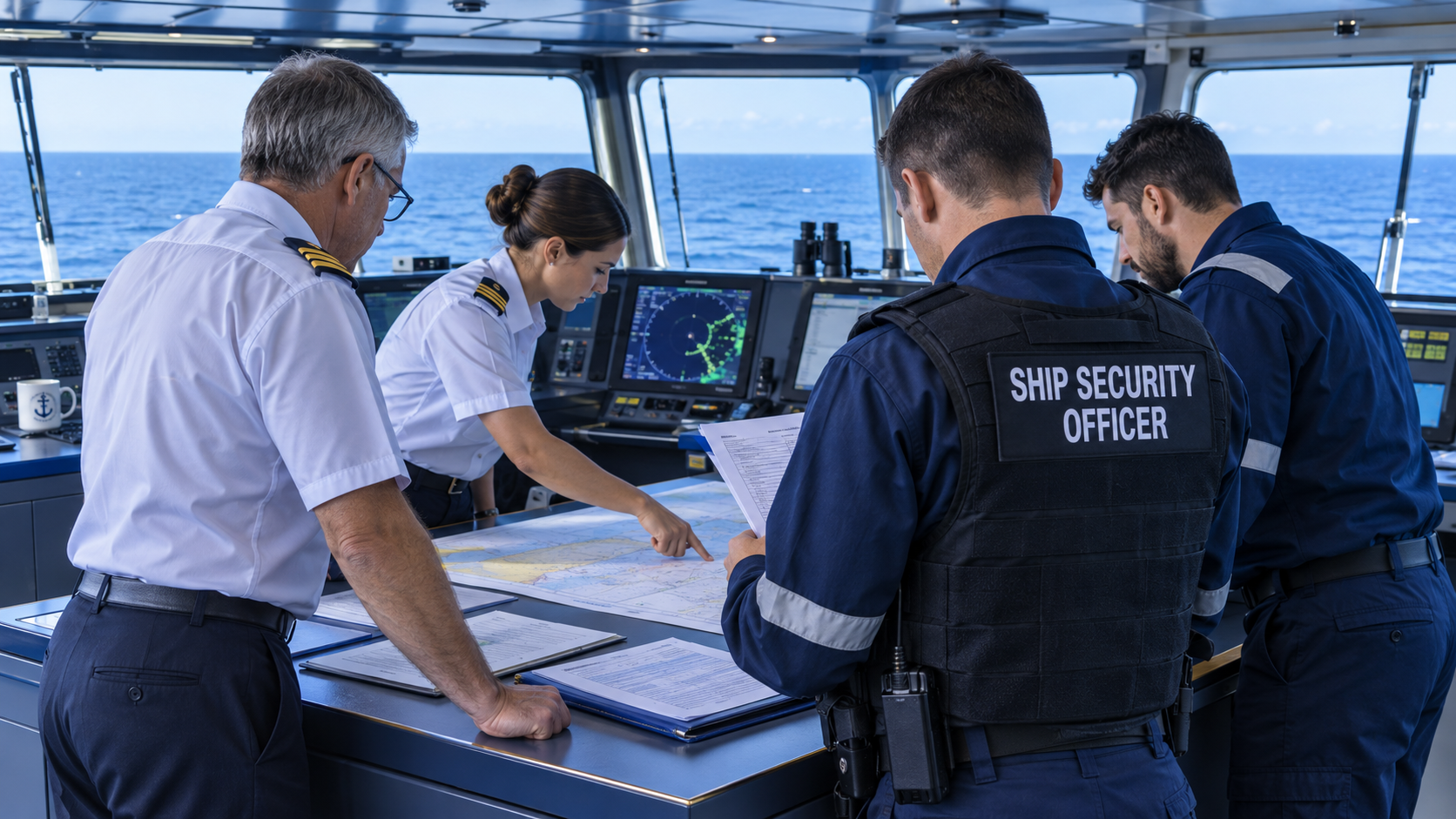
Professional Maritime Security Standards
Introduction
Choosing a professional maritime security company is critical for safe, efficient vessel operations. For owners, operators, and seafarers, reliability is defined by verifiable standards: robust pre-deployment screening, realistic tasking, compliant documentation, and security personnel who support – not disrupt – onboard routines. A credible ship security provider should demonstrate this professionalism long before embarkation and maintain it through handover, watchkeeping, and post-rotation reporting.
For maritime job seekers, the same standards apply. A serious provider will be transparent about recruitment criteria, training expectations, rules of engagement, and reporting lines so that security teams integrate cleanly with Masters, CSOs, and port stakeholders without creating friction onboard.
Industry context
Modern maritime security extends far beyond traditional anti-piracy tasks. Operators face layered threats: piracy and armed robbery in key chokepoints, narcotics and contraband smuggling pressures on commercial and ferry routes, cyber-enabled interference with navigation or cargo systems, and complex compliance obligations under the ISPS Code and wider IMO frameworks. A professional security partner must understand how these risks interact with commercial pressures, routing decisions, and port calls.
Reliable maritime security companies build their operations around vessel protection and crew safety as the priority, while respecting the Master’s authority and shipboard routines. This means security personnel who understand ISPS roles, Ship Security Plans, and bridge resource management, and who can contribute to drills and briefings without slowing operations. When done correctly, security support enhances voyage planning, watchkeeping, and incident response, giving Masters and CSOs clear situational awareness and documented assurance that procedures are being followed. The result is reduced exposure to piracy, smuggling attempts, and regulatory non-compliance – and smoother calls at high-risk or sensitive ports.
Practical measures
- Verified recruitment and screening: Ensure the provider conducts rigorous identity checks, seagoing background verification, right-to-work and travel readiness confirmation, and reference validation for all deployed personnel.
- Documented training and ISPS alignment: Ask for training records aligned to recognised maritime security standards, including ISPS awareness, vessel routines, bridge etiquette, and clear understanding of rules of engagement and escalation.
- Clear SOPs, ROE, and reporting lines: Request written standard operating procedures, task-specific ROE, and organisational charts that show how security teams report to the Master, CSO, and shoreside operations without bypassing the chain of command.
- Integrated watchkeeping and drills: Confirm that guards can fit into bridge and deck watch schedules, participate in security drills, and contribute to access control and gangway management without disrupting crew workflows or passenger experience.
- Structured documentation and handovers: Review sample incident reports, voyage summaries, and handover templates to check that the provider records security activity clearly, supports port and flag inspections, and maintains continuity between rotations.
Further resources
To understand how these standards translate into day-to-day vessel protection and mixed-crew operations, explore our dedicated overview of what we do at MS Security Group. For a broader view of our maritime security and vessel protection solutions, visit our maritime security services page.
Source
Original article: What makes a maritime security company professional and reliable?
Careers
If you're interested in joining our team, apply here: Join MS Security.
Prepared by MS Security Group — experts in vessel protection, anti-piracy, and counter-narcotics operations.