- Industry News
- July 13, 2026
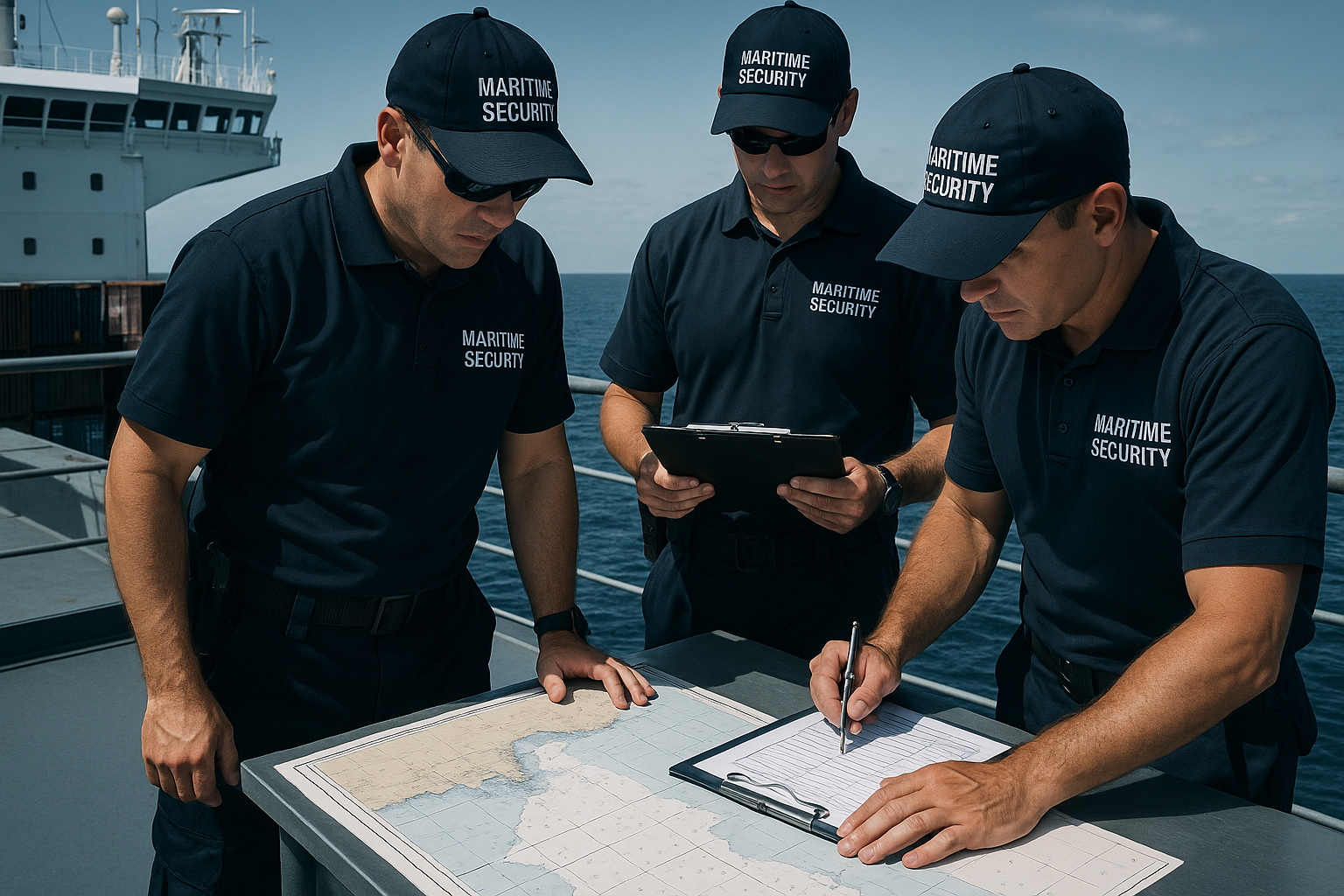
Vessel Security Risk Assessment
Introduction
Before any maritime security team steps on board, vessel protection companies conduct a structured risk assessment to match protection measures to the specific voyage. This process balances threat, compliance, and commercial realities so security teams support, rather than disrupt, safe vessel operations.
For shipowners, operators, and security professionals, understanding this assessment helps clarify why certain team compositions, procedures, and documentation are required prior to embarkation.
Industry context
Modern vessel protection goes far beyond counter-piracy. Companies now consider piracy, armed robbery, smuggling attempts, irregular migration, and cyber-enabled threats alongside traditional physical risks. Route profiles, recent incident data, port calls, cargo sensitivity, vessel speed and freeboard all feed into a voyage-specific risk picture.
From a compliance perspective, providers must align with ISPS Code, flag and coastal state requirements, and relevant IMO guidance. This includes verifying that the Company Security Officer (CSO) and Ship Security Officer (SSO) are aligned on the Ship Security Plan, reporting lines, and Rules for the Use of Force where applicable. Effective risk assessment directly shapes routing decisions, watchkeeping posture, access control, and drills, which in turn protect crew welfare and ensure that any security response remains lawful, proportionate, and well documented.
An accurate pre-embarkation assessment also supports resilience against smuggling and contraband risks by tightening access control and deck patrols in higher-risk ports. In parallel, it enables clear communications planning, medical provision checks, and contingency triggers, ensuring that any escalation is controlled and coordinated across bridge, security team, and shore stakeholders.
Practical measures
- Profile the voyage and threat picture: Assess the route and port schedule against current incident reports, intelligence, and advisories to understand likely adversary capability, approach methods, and response times.
- Match team composition to task: Select personnel with proven maritime backgrounds, strong judgement under pressure, medical fitness for work at sea, and the ability to integrate into the vessel’s chain of command.
- Verify compliance and documentation: Confirm flag and coastal state rules, check Company and Ship Security Officer alignment, and review all documentation governing carriage of security personnel, conduct, and escalation thresholds.
- Strengthen shipboard procedures and drills: Align the Ship Security Plan, watchkeeping arrangements, and muster routines with the assessed risk, and rehearse de-escalation, citadel use, and communications protocols with crew.
- Request key pre-embarkation information: Obtain route and port schedule, vessel particulars, client tasking instructions, current threat assessments, and any standing operating procedures or rules that will govern onboard activity.
Further resources
For a deeper view of how these assessments translate into day-to-day operations, explore our maritime security services on the MS Security Group services overview. You can also learn more about our broader capabilities and operational approach on the what we do page.
Source
Original article: LinkedIn draft on vessel protection risk assessment
Careers
If you're interested in joining our team, apply here: Join MS Security.
Prepared by MS Security Group — experts in vessel protection, anti-piracy, and counter-narcotics operations.