- Industry News
- June 30, 2026
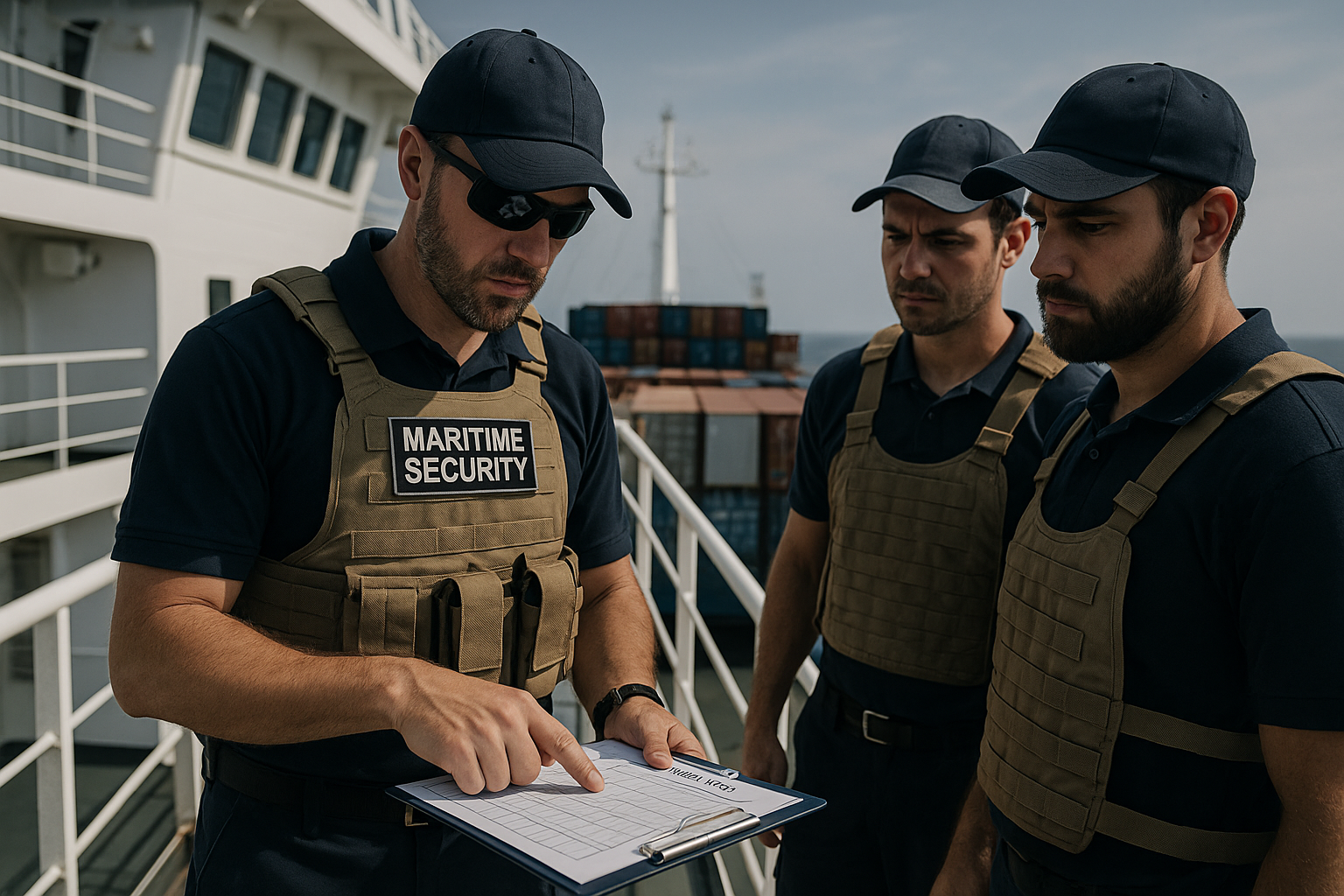
Maritime Team Leader Duties
Introduction
The day-to-day work of a maritime security team leader goes far beyond standing a watch. On any given transit, you are responsible for turning security policy into predictable practice: planning the watchbill, directing the team on the deck plates, documenting activity, and acting as the link between the security detail and the ship’s command. Your role underpins both the vessel’s safety and its commercial schedule.
Whether you are embarked on a cargo vessel, ferry, or specialist platform, effective leadership means combining vigilant ship protection with disciplined reporting and calm decision-making under pressure. This overview sets out what a professional team leader actually does during a voyage and what operators expect from the role.
Industry context
Modern maritime security operations sit at the intersection of piracy risk, organised smuggling, evolving cyber threats, and strict compliance demands under the ISPS Code and IMO frameworks. As a team leader, you maintain a coherent onboard security posture that supports the vessel’s Ship Security Plan (SSP) while remaining agile to changing threats and routing decisions. Your daily routines must align with the Master’s intent and the Safety Management System so that security actions never undermine seaworthiness or schedule.
In higher-risk waters, this means ensuring watchkeeping is intelligence-led, access control is enforced without disrupting cargo or passenger flow, and that any suspicious approaches, small craft movements, or changes to port conditions are logged and escalated early. In lower-threat environments, the focus shifts towards standards and compliance: consistent access control, correct implementation of restricted areas, proper use and stowage of security equipment, and accurate documentation for port State control or company audits. Throughout, the team leader’s task is to give the Master and Ship Security Officer confidence that security is being handled professionally, predictably, and in line with the SSP.
Practical measures
- Plan and control the watchbill: Allocate posts, ensure adequate coverage of key access points and deck areas, rotate staff to avoid fatigue, and confirm each shift understands its duties and reporting lines.
- Maintain kit and access control readiness: Conduct pre-watch equipment checks, verify communication gear and lighting are serviceable, oversee gangway and restricted area control, and ensure visitor identification and search procedures are consistently applied.
- Lead daily briefings and reporting: Deliver concise threat and posture briefings, record incident logs and near-misses, note any SOP or SSP deviations, and submit clear daily summaries to the Master or SSO with actions taken and items for follow-up.
- Coordinate with ship’s command and ports: Liaise professionally with the Master, bridge team and SSO on changes in routing, security levels or port requirements, and, where necessary, communicate with port facility security to align onboard measures with shore-side controls.
- Reinforce drills, SOPs and calm decision-making: Run or support security drills, coach the team on correct SOP application under pressure, and set the standard on punctuality, professional conduct and evidence-quality note-taking during live incidents.
Further resources
For a detailed view of how MS Security Group structures vessel protection, anti-piracy and counter-narcotics deployments, explore our maritime security capabilities. Shipowners and operators looking to strengthen onboard security leadership can review our full range of maritime security services.
Source
Original article: LinkedIn draft on maritime security team leaders
Careers
If you're interested in joining our team, apply here: Join MS Security.
Prepared by MS Security Group — experts in vessel protection, anti-piracy, and counter-narcotics operations.