- Industry News
- May 8, 2026
First Maritime Deployment Guide
Introduction
Your first deployment in a maritime security role is a practical test of professionalism in a highly regulated, confined environment. It is less about bravado and more about proving you can follow procedures, integrate with the crew, and maintain consistent, low-impact protection across the voyage.
New guards should expect a structured onboarding process, clear performance expectations from the Master and client, and a strong emphasis on discipline, documentation, and situational awareness from day one.
Industry context
Modern vessel protection teams operate against a broad risk backdrop that includes piracy, armed robbery, smuggling, stowaway attempts, and evolving cyber threats to navigation and cargo systems. Your first deployment will expose you to how shipping companies fuse security plans, routing decisions, and onboard drills to comply with the ISPS Code and IMO guidance while still maintaining commercial tempo.
On cargo vessels, ferries, and similar platforms, private maritime security is expected to provide visible yet non-disruptive deterrence, accurate reporting, and calm conduct around crew and passengers. You will see how watchkeeping, access control, citadel and muster procedures, and information security are woven into daily routines, with the Master retaining ultimate authority for safety and security. Understanding this context helps new guards appreciate that effective maritime security careers are built on methodical, compliant practice rather than high-profile incidents.
Practical measures
- Prepare compliant documentation and training evidence: Ensure your passport, visas, medical fitness certificates, and mandatory seafarer and security qualifications are valid, accessible, and aligned with flag, port state, and client requirements before embarkation.
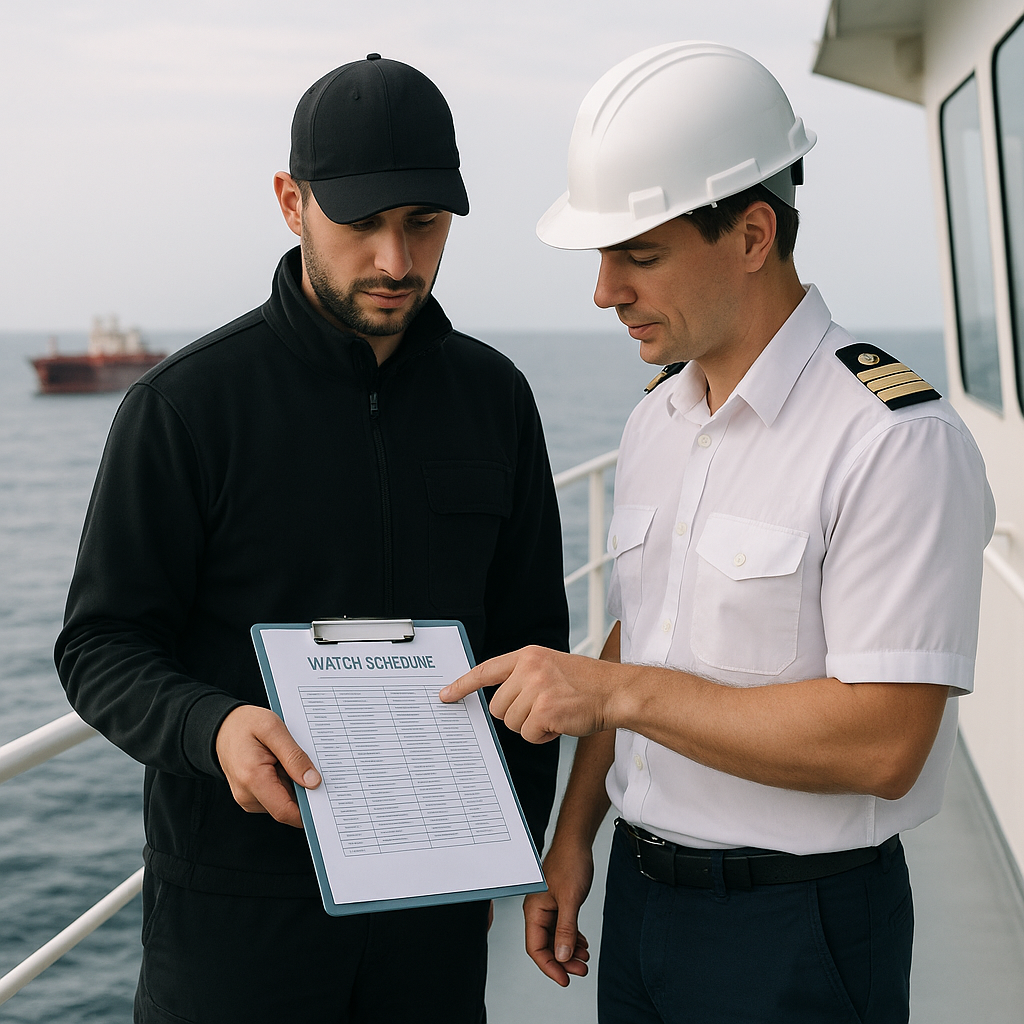
- Master watch routines and log discipline: Learn the vessel’s watchbill, adhere strictly to timings, and maintain accurate logs of rounds, incidents, and handovers. Long, repetitive night watches and port calls demand sustained alertness and clear, factual reporting.
- Follow the ship’s security plan and Master’s orders: During your shipboard brief, absorb the client’s expectations, emergency procedures, and access control rules. Demonstrate respect, sobriety, cultural awareness, and readiness to uphold the Master’s authority in all security matters.
- Adapt to confined living and controlled information: Expect limited space, variable connectivity, and strict rules for personal kit, photography, and information sharing. Maintain operational security by keeping conversations, posts, and imagery free of sensitive movement or security details.
- Build situational awareness during routine tasks: Use routine patrols, gangway duties, and embarkation checks to refine your eye for anomalies, from unusual behaviour near access points to cargo irregularities. Consistent awareness reduces the likelihood of first-deployment failures through complacency.
Further resources
To understand how professional security teams are integrated into shipping operations across different vessel types and routes, explore our core maritime security capabilities. You can also review our wider services overview to see how onboard deployments connect with risk assessments and shore-based support.
Source
Original article: LinkedIn draft on first maritime security deployments
Careers
If you're interested in joining our team, apply here: Join MS Security.
Prepared by MS Security Group — experts in vessel protection, anti-piracy, and counter-narcotics operations.